For decades, business communication has followed a remarkably predictable pattern. A brand sends a message — whether through email, SMS, or a push notification — and a customer receives it, usually ignores it, and moves on. There was little room for nuance, interaction, or genuine connection.
That era is ending.
Rich Communication Services, or RCS, is quietly staging one of the most significant revolutions in mobile messaging history. Quietly, because for most consumers it looks like nothing more than an upgraded texting experience. But for businesses willing to pay attention, RCS for Business represents a fundamental rethinking of what a customer conversation can look like — and what it can achieve.
This is not incremental improvement. This is a generational leap.
The Problem with the Way We've Been Communicating
Before unpacking what RCS offers, it's worth sitting with the frustration it's designed to solve.
Modern consumers are not just busy — they're actively overwhelmed. Studies consistently show that the average person encounters hundreds of brand messages every single day, across email inboxes, social media feeds, browser pop-ups, and yes, SMS threads. Against that backdrop, the response rates and engagement numbers most marketers quietly accept as "normal" are, in truth, a symptom of a broken model.
SMS, for all its reliability and ubiquity, was designed in 1992. Think about that for a moment. The backbone of most business-to-consumer mobile messaging was architected before the World Wide Web was publicly accessible. It has no native support for images, no read receipts, no interactive elements, no brand verification, and no real way for the customer to feel anything other than the passive recipient of a broadcast.
Email, meanwhile, has been declared dead so many times that the announcement itself has become a cliché — and yet the inbox remains so crowded that achieving meaningful open rates requires near-constant optimization just to stay in place.
The digital advertising ecosystem, for its part, is increasingly expensive, increasingly mistrusted, and increasingly blocked by software that consumers deliberately install to avoid it.
None of this means these channels are useless. But it does mean that relying on them alone — and expecting the same returns that were possible five or ten years ago — is a strategy built on a crumbling foundation. RCS for Business is the alternative that brands have been waiting for, whether they knew it or not.
What RCS for Business Actually Is
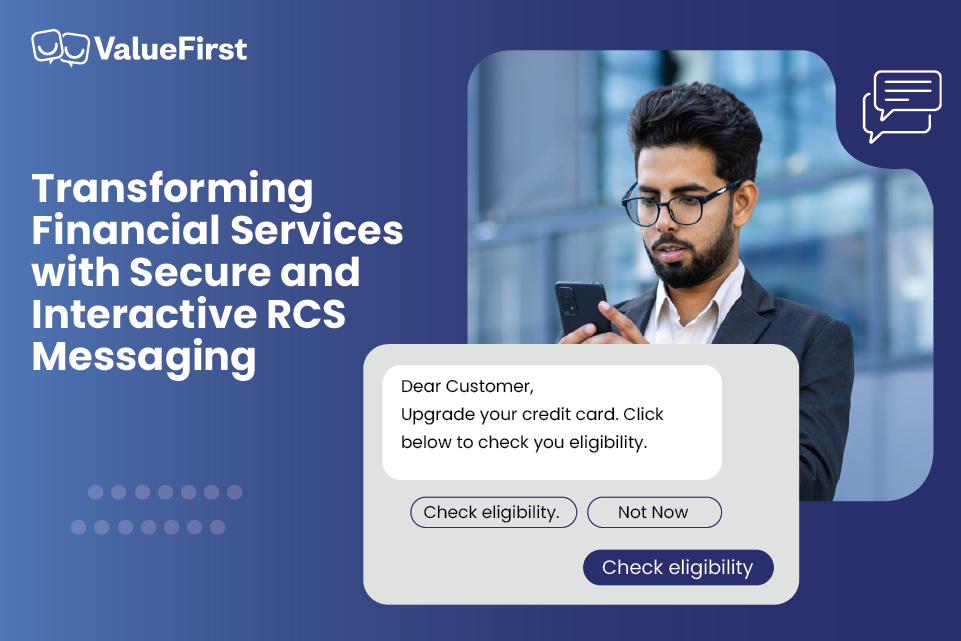
RCS is the global standard that succeeds SMS, and RCS for Business is the commercial layer built on top of that standard — giving brands the tools to create meaningful, media-rich, interactive experiences delivered directly to a customer's native messaging application.
Critically, this means no app downloads. No new platforms to sign up for. No learning curves for the consumer. Messages arrive exactly where texts from family and friends already land, on Android and now increasingly on iOS as well.
The experience is native. The trust is immediate. And the capabilities are, compared to what SMS ever offered, extraordinary.
Five Ways RCS Is Changing the Game
1. Rich Media That Actually Commands Attention
The most immediately visible difference between SMS and RCS is the ability to send genuinely rich content. Images, GIFs, short videos, audio messages, PDFs, and promotional graphics can all be embedded directly within the messaging thread — without requiring the customer to tap a link, leave the conversation, or launch a separate browser.
The implications for customer experience are substantial. Consider how a fashion retailer might currently handle a customer inquiry about a product. Under the SMS model, the brand's best option is to type a description and paste a link, hoping the customer will bother to follow it. Under RCS, the same interaction becomes something entirely different: a curated visual experience showing multiple product shots, a short video of the item in motion, sizing guides as a downloadable PDF, and a suggested reply button allowing the customer to immediately signal their interest or ask a follow-up question.
It's not merely prettier. It's functionally more useful for the customer, and it's substantially more likely to move that customer toward a decision.
Visual communication also carries an emotional dimension that plain text simply cannot replicate. A hospitality brand sharing a short, sun-drenched clip of a resort pool creates a feeling that no combination of words can fully match. A food delivery service sending an image of a freshly prepared meal taps into appetite in a way that "Order your favourite dish tonight" never could. Emotional resonance drives conversions — and RCS hands brands the tools to manufacture it.
2. Interactive Conversations That Replace Static Broadcasts
One of the most meaningful structural shifts RCS introduces is the move from broadcasting to genuine dialogue. SMS was, at its core, a one-way channel dressed up as two-way communication. RCS is built from the ground up for interaction.
Carousels allow brands to present multiple products, services, or options in a horizontally scrollable format within a single message. A customer browsing a new smartphone model can swipe through different colour variants, storage tiers, and bundled accessories without ever leaving the thread. Each card within the carousel can carry its own image or video, descriptive text, and action buttons — book a demo, add to wishlist, start a purchase, connect with support.
Rich cards serve a complementary function, pulling together visuals, text, and suggested actions into a single, self-contained unit. Think of them as miniature landing pages delivered inside a text conversation: compact enough to feel effortless, but information-dense enough to be genuinely useful.
Suggested replies deserve particular attention because they reveal something important about where this technology is heading. Rather than waiting for a customer to type a response, brands can anticipate the most likely next steps and present them as one-tap options. This doesn't just speed up the interaction — it dramatically reduces the friction that causes customers to abandon conversations mid-journey. When the path of least resistance leads directly toward a purchase, a booking, or a resolution, brands benefit from a kind of structural nudge that SMS simply cannot replicate.
Perhaps most impressively, RCS supports in-conversation commerce. Payments, shipping coordination, and return processing can all be handled without the customer ever needing to leave the messaging thread. The thread becomes, in effect, a complete transactional environment — which eliminates the drop-off that occurs every time a customer is asked to switch context, open a browser, log into an account, and navigate a website they may not remember using before.
Web view functionality takes this even further, enabling brands to serve an immersive, full browser experience — complete product pages, booking flows, checkout interfaces — rendered directly within the conversation. From initial product inquiry to completed purchase, the entire journey can now unfold within a single thread.
3. Verified Identity That Eliminates the Trust Deficit
There is a crisis of trust in mobile messaging, and it is entirely justified.
Text message scams have become a significant and growing threat to consumers globally. The scale of the problem is staggering — in 2024 alone, losses attributed to text-based fraud ran into the hundreds of millions of dollars, affecting consumers across every demographic. Against that backdrop, when an unfamiliar number sends a message claiming to be from a major bank, a parcel delivery service, or a government agency, the rational consumer response is suspicion. Or outright deletion.
RCS for Business addresses this directly through a mandatory sender verification process. Before any brand can deploy an RCS for Business campaign, its profile must be reviewed and authenticated either by the mobile carrier or by Google. This process involves verification of the business's legal identity, brand assets, and contact information — ensuring that the organisation behind the profile is genuine and accountable.
Once verified, the brand's messaging profile displays its full name, official logo, brand colours, and a tagline. Every message arrives carrying unmistakable visual evidence of the sender's identity. There is no ambiguity. There is no possibility of impersonation through spoofed numbers, because verification is enforced at the infrastructure level, not simply claimed by the sender.
For consumers, this is enormously reassuring. The visual consistency of a verified brand profile creates an immediate and reliable signal of legitimacy — one that works not because customers have been taught to look for it, but because it is simply, unmistakably present. For brands, it means that customer attention is not constantly fighting against a background of suspicion. The conversation starts from a position of trust, which is an extraordinary competitive advantage.
4. Seamless Access Without Friction
Every point of friction in a customer journey represents a potential exit. And one of the largest friction points in modern business communication is the assumption that customers will download and learn a new application simply to interact with a brand.
Dedicated brand apps have their place — for highly engaged, loyal customers who interact frequently enough to justify the investment of downloading, setting up, and maintaining a dedicated application. But as a channel for reaching the broader customer base, the app model creates a meaningful barrier. Download rates are low. Abandonment during the setup process is common. And once installed, apps compete for screen real estate against every other application a customer has already committed to.
RCS for Business sidesteps this problem entirely. Because it operates within the device's native messaging application, there is nothing to download, no account to create, and no new interface to learn. For the customer, the experience of receiving a message from a business using RCS feels as immediate and friction-free as receiving a text from a friend.
This has a compounding effect on relationship quality. When customers don't have to work to reach a brand, they reach out more often. When they reach out more often, the relationship develops more depth. When the relationship has more depth, loyalty follows. By removing the barrier of the download, RCS makes every subsequent step in the customer relationship easier and more natural.
5. Customer Control as a Feature, Not an Afterthought
Contemporary consumers have become, understandably, very deliberate about which brands they allow into their communication channels. Years of aggressive marketing, unwanted promotional texts, and the erosion of clear opt-out mechanisms have made many customers deeply cautious about giving any business permission to message them.
RCS for Business is built around a model of genuine customer agency. Opt-in and opt-out mechanisms are clear, accessible, and functional — not buried in terms and conditions or disguised as something else. Customers can control the frequency of communications, manage their preferences, and disengage from a brand's messaging with the same ease with which they engaged.
This might seem, on the surface, like a concession to consumer preference that limits a brand's reach. In practice, it does something far more valuable: it ensures that the audience a brand is speaking to has actively chosen to be there. A smaller, genuinely engaged audience consistently outperforms a larger, resentful one. Every message sent to a customer who has freely chosen to receive it carries more weight, lands with less resistance, and is far more likely to generate a meaningful response.
There is also a broader reputational dimension. Brands that respect their customers' communication preferences build a kind of goodwill that is difficult to quantify but unmistakable in its effects. Trust, once established, compounds. And in a marketplace where attention is the scarcest resource, the ability to reach a customer who genuinely wants to hear from you is more valuable than the ability to interrupt one who doesn't.
The Bigger Picture: Why This Matters Now
It would be easy to read about RCS for Business and categorise it as yet another platform update — another thing to learn, another channel to manage, another strategy to develop. That reading is understandable, but it misses the significance of what's actually happening.
The combination of capabilities that RCS for Business delivers — rich media, interactive formats, verified identity, frictionless access, and genuine customer control — doesn't just improve messaging. It redefines what a brand-to-customer conversation can be. For the first time, the texting channel — the most direct, personal communication channel most consumers use daily — can carry the same richness, trustworthiness, and interactivity that previously required a dedicated app, a polished website, or a physical interaction to achieve.
Brands that recognise this early and invest in building genuine RCS capabilities are not simply adopting a new feature. They are positioning themselves to occupy a uniquely valuable piece of their customers' attention — in a channel that is trusted, native, and designed for real conversation.
The noise has never been louder. But for brands willing to think differently about how they communicate, RCS for Business offers something increasingly rare: a way to actually be heard.
Explore our RCS for Business solutions to learn more.